
An Organ and Choir Chapel: First Fruits of the New Abbey Woodshop
Kevin Vogt, Associate for Project Development
When the new Abbey Woodshop opened in 2023, there were high hopes for cooperation and mutual enrichment between the 170-year-old Abbey Woodworking enterprise, the newly formed Abbey Organ Builders, and the other Abbey artisans who share the new state-of-the art facility.
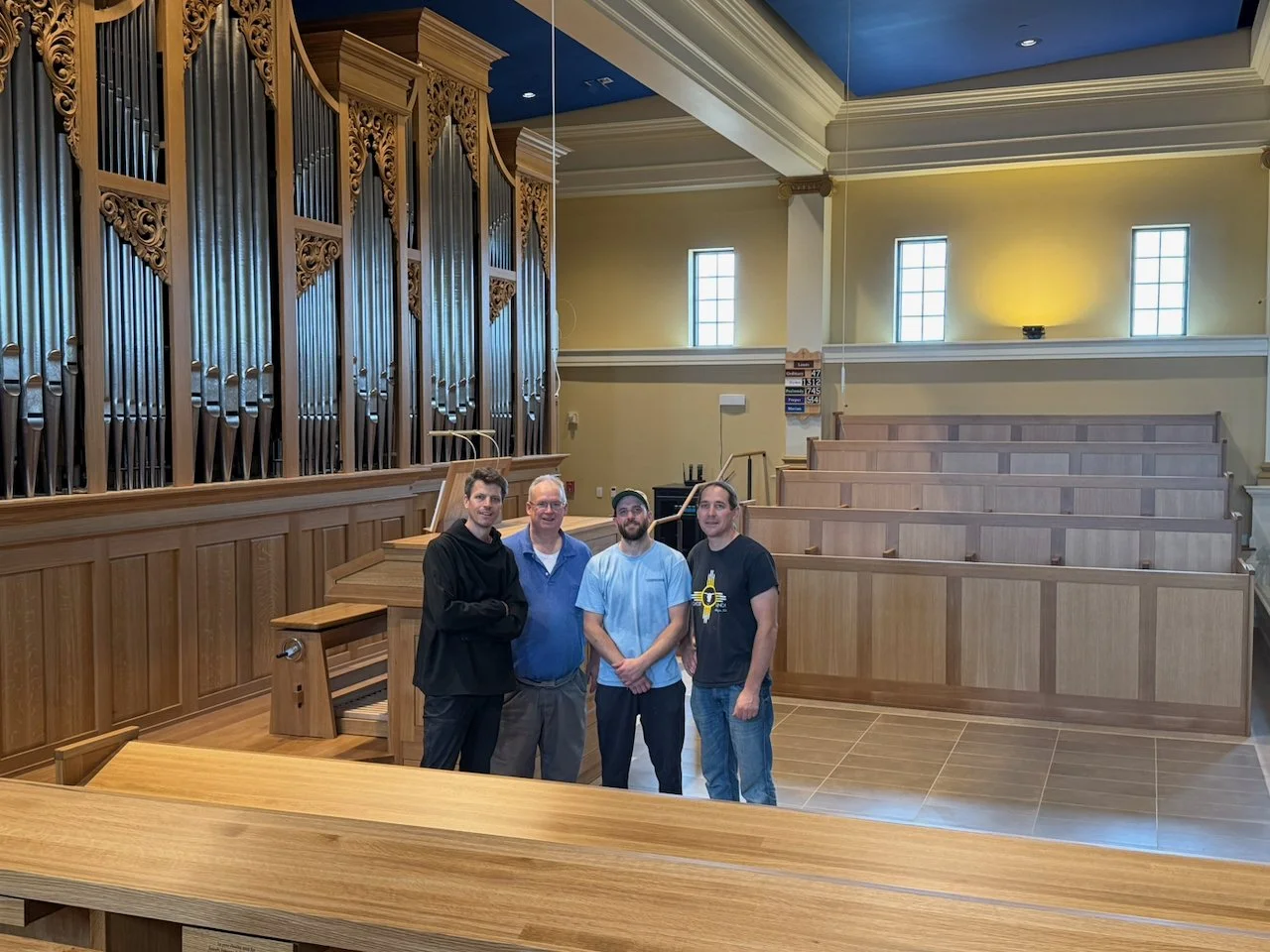
The first organ contract with Saint Michael the Archangel Catholic Parish in Leawood, Kansas, offered a unique missionary opportunity for collaboration between Abbey Organ Builders and Abbey Woodworking—the configuration of an organ and choir loft as a choir chapel, well-appointed for music ministry at parish Masses, and always ready as a formal, dedicated space for the communal celebration of the Liturgy of the Hours.
After two years of construction, Abbey Organ Builders Opus 1 was delivered in January 2026. Technical installation by four organ builders occurred over four weeks, after which the voicing team of Martin Pasi, Christian Metzler, and Lena Raffler spent the next three months teaching each of the organ’s 3,000 pipes to “sing” with the most beautiful tone and to blend with its neighbors. The organ was blessed by Archbishop Shawn McKnight on May 3, 2026, and will be publicly presented in its inaugural recital on October 27, 2027, by Olivier Latry, organist of Notre-Dame Cathedral in Paris.
Inspired by Historic Organs in Benedictine Abbeys
It seems appropriate that the first organ made by Abbey Organ Builders was partly inspired by the tonal architecture of eighteenth-century organs in central Europe, particularly the Benedictine Abbey organs in the Hapsburg territories of Southern Germany and Austria. As the last large organ to be finished by Abbey Organ Builders founder Martin Pasi, its stylistic orientation is in some way a tribute to him and his origin in the ancient Austrian city of Bregenz along the Eastern shore of Lake Constance. The organ’s colorful array of historically inspired sounds is nevertheless filtered through the modern, personal style for which Pasi is known. Throughout his career, Pasi consciously evaded stylistic pigeonholing:
The question of eclecticism and style is a very difficult one for me to answer. I don’t think I build organs in a particular style but rather combine styles and organ building methods of the past. Since everything has been done in the past already, the art of building a successful instrument is to bring together the sounds that work best with each other. Once the blending task is accomplished, any music can be played beautifully. (Martin Pasi to Kevin Vogt, 31 August 1998)
While the organ is designed to render a broad range of historical organ music convincingly, it is like its European antecedents oriented first toward liturgical improvisation. Like the Saint John’s Abbey organ, it is also luxuriously appointed with a variety of softer sounds for accompaniment of voices chanting psalms and canticles in alternation between antiphonal choirs.
Choir Stalls after Saint John’s Abbey
The new choir stalls, designed by Abbey Woodshop director Father Lew Grobe, O.S.B., are made of white oak to match the organ case. They are modeled after the choir stalls of Saint John’s Abbey, which were designed by architect Marcel Breuer.
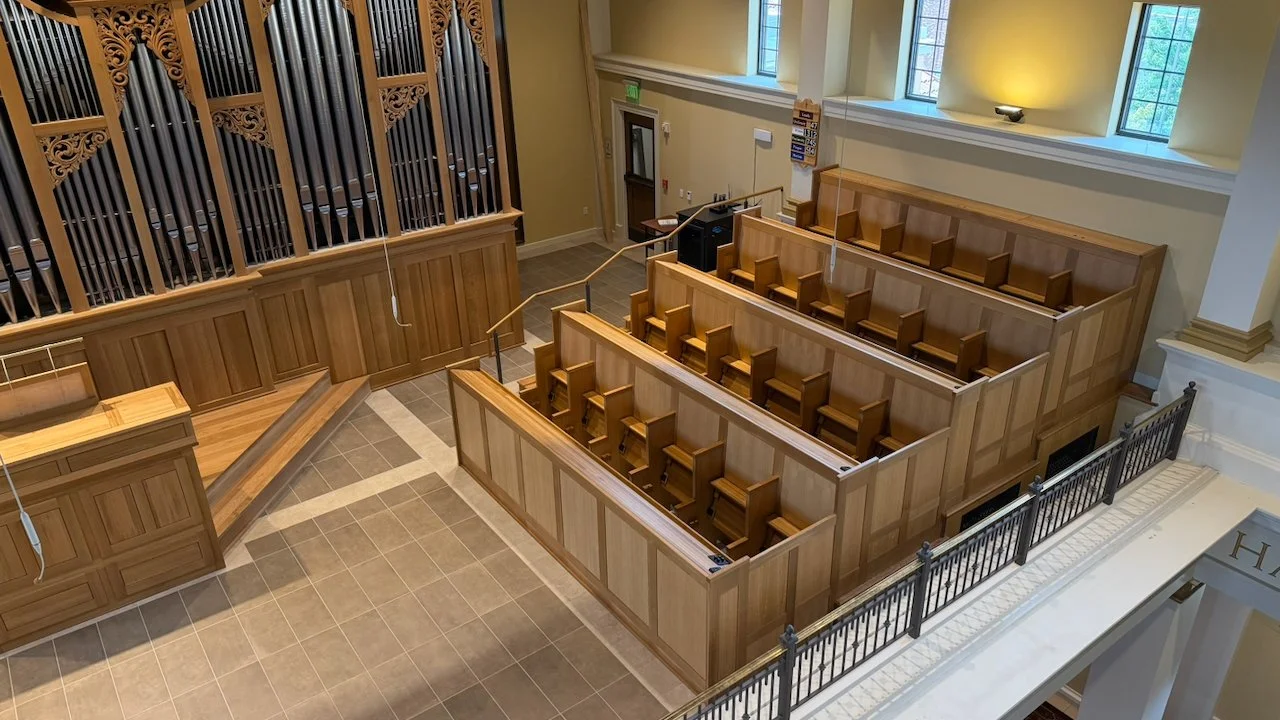
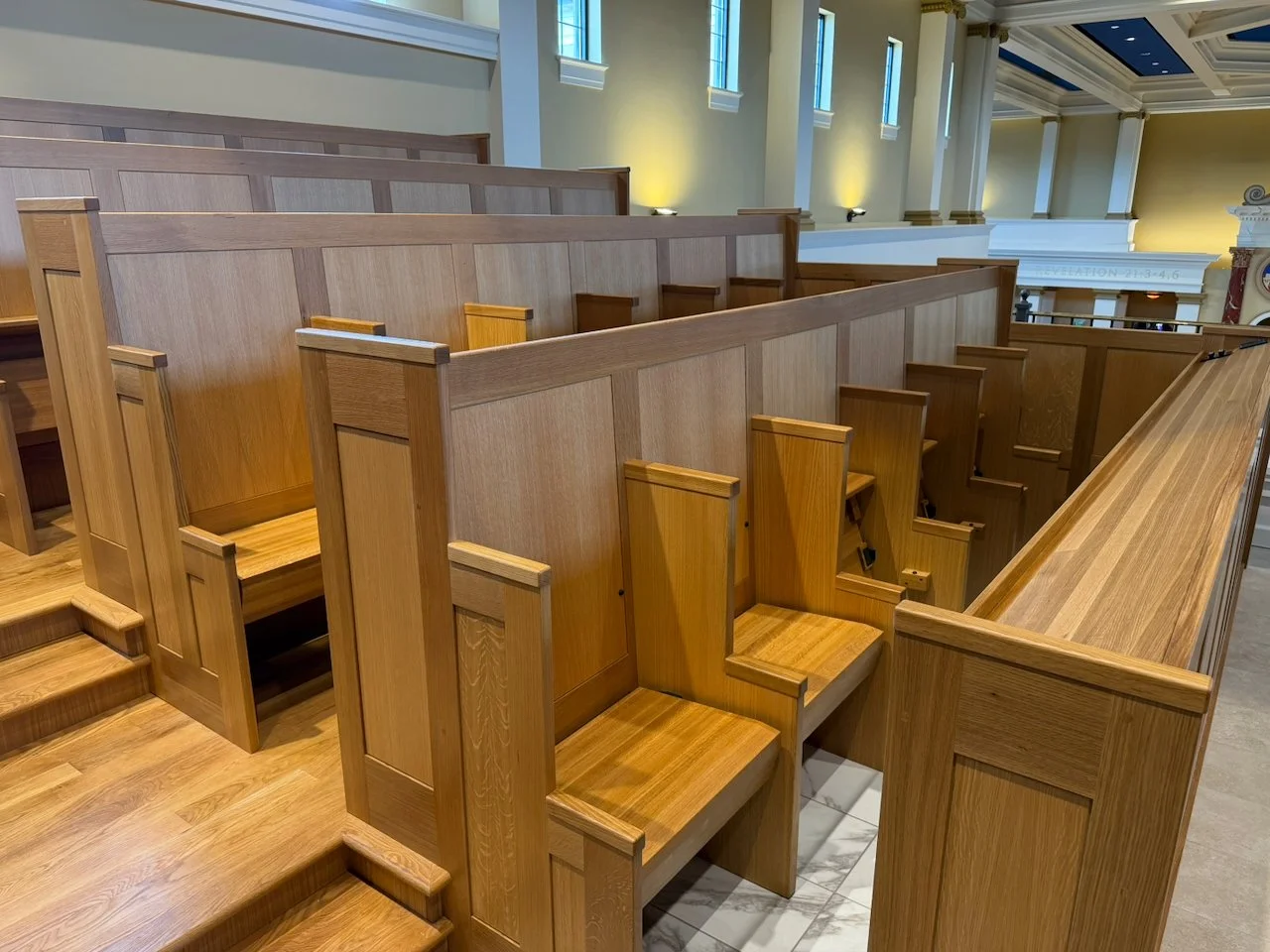
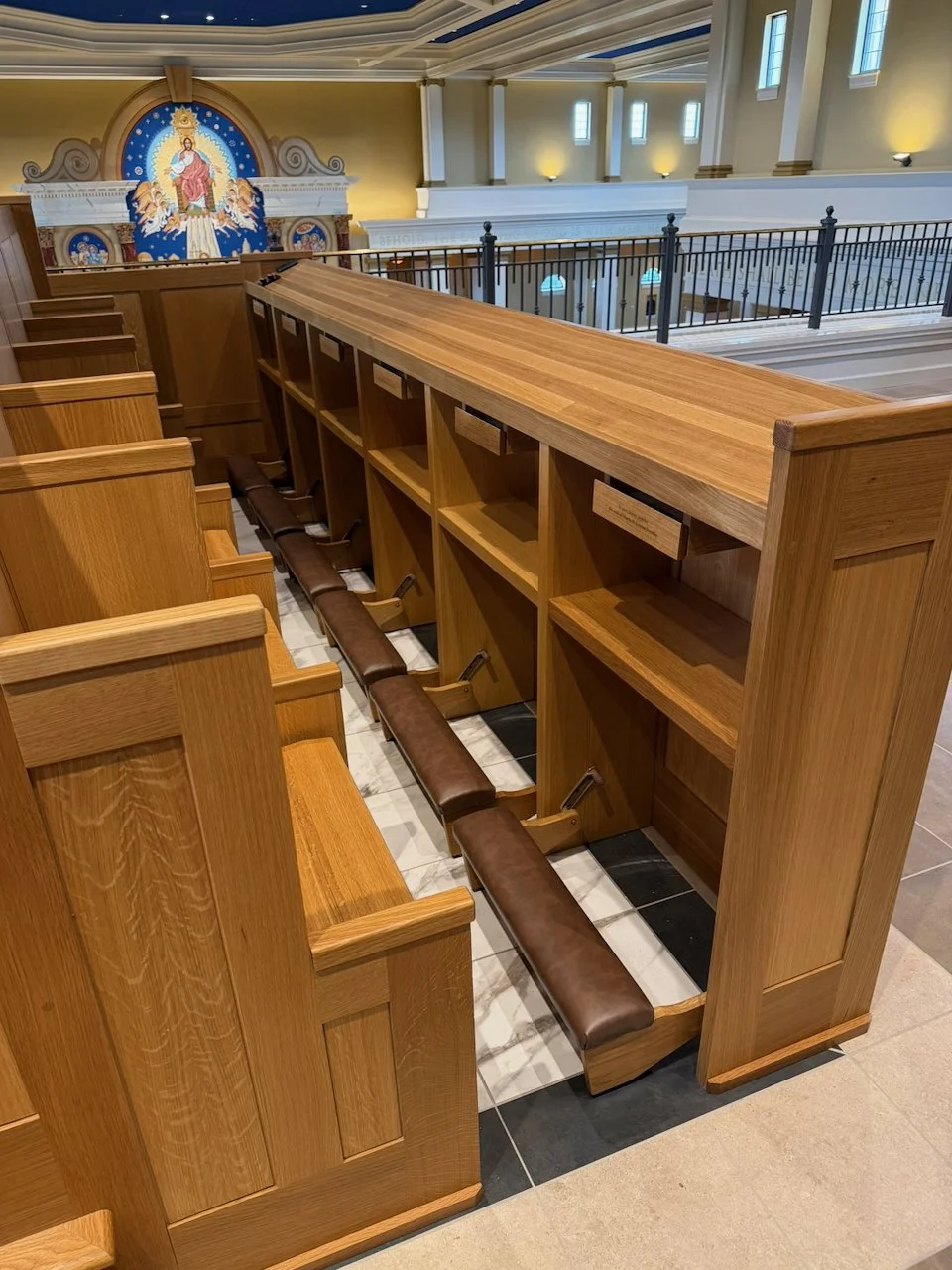
Choir stalls are individual seats that allow one to feel simultaneously part of the community and alone before God. There is a desk upon which prayer books and choir music can rest. Storage shelves at each place provide a discrete space for hymnals, psalters, and choir folios that are used daily, while leaving the choir chapel always formal and ready for communal prayer. Kneelers allow choristers to kneel along with others in the liturgical assembly.
A special feature borrowed from the Breuer choir stalls at Saint John’s Abbey are the trays that pull out under the top music desk. These trays allow one to balance a book for reading while seated during the recitation or chanting of the psalms, or during private prayer and meditation. Engraved on the front of each tray is a prayer intention requested by the donor of the choir stall, bidding worshippers of future generations to join in intercessory prayer.
Vision and Hope
As we come to know Christ, adore him, and receive him in Holy Communion, we become increasingly aware of our mission in him to “make Eucharist,” offering daily the sacrifice of praise and thanksgiving to the Father, and interceding in prayer—and self-emptying—for the life of the world.
The choir chapel at the Church of Saint Michael the Archangel in Leawood will be a place of formation in this liturgical spirituality and an expression in the parish church of the liturgical prayer that belongs to every baptized Christian and every domestic church. It will also be a fitting place for the lay choir, the “joyful attendant of the pilgrim people of God and a festive sign of their heavenly home” (Snowbird Statement on Catholic Liturgical Music, 20).
Special thanks to the Abbey Banner for allowing us to reproduce this article.